top of page

Blog
High value content on Stabilometry, Baropodometry and Virtual Reality.
All you need to know!


Cervicogenic Dizziness: What It Is, Why It Happens, and How to Treat It
Cervicogenic Dizziness: What It Is, Why It Happens, and How to Treat It -A clear, evidence‑based guide for clinicians and patients. Dizziness is a common complaint among adults, describing sensations such as lightheadedness, disequilibrium, or a feeling of heaviness in the head. According to the Bárány Society, dizziness reflects a disturbed or impaired spatial orientation without a hallucinatory sense of motion. Emerging evidence suggests that cervical spine dysfunction may

Ana Souto
Feb 6
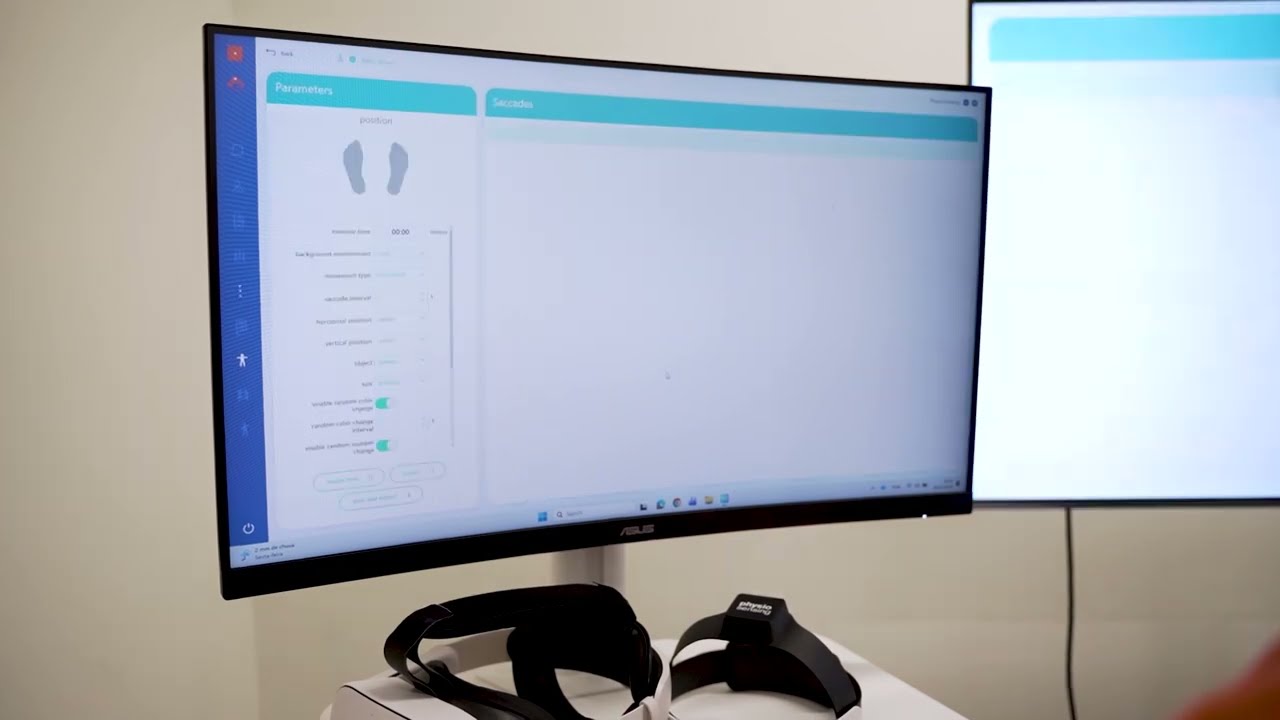
Not All Eye Exercises Are the Same: VOR Training vs. Oculomotor Training in Vestibular Dysfunction and Concussion
The visual and vestibular systems work in tight coordination to keep the world stable as we move through it. When this integrated system is disrupted, whether through peripheral vestibular hypofunction or after a traumatic brain injury (TBI), patients commonly experience dizziness, blurred vision, difficulty reading, visual fatigue, and challenges with balance. Although some rehabilitation programs for these conditions may appear similar on the surface, the underlying mechani
Ana Souto
Feb 3

Vestibular Rehabilitation: Achieving Habituation through Virtual Environments
Complaints of dizziness and a feeling of unsteadiness in visually complex environments, such as in grocery stores, during traffic, and among crowds, are frequent in patients suffering from vestibular disorders. One explanation for this is the higher reliance on visual information in these patients for postural orientation. The fear and anxiety associated with these daily life scenarios often lead to avoidance behaviour, which in turn increases the sensitivity to it. It is hig
Ana Souto
Jan 27

Assessing Cervical Proprioception in Dizziness and Instability: The Joint Position Error Test
Neck afferent information is important for coordinated head, neck, and upper-extremity movements, as well as for maintaining body position and spatial orientation. When distorted, it can heavily contribute to altered cervical sensorimotor control, which can heavily affect balance and stability and lead to symptoms of dizziness and unsteadiness (Peng et al., 2021). Considering this, evaluation of cervical proprioception may be the missing key to better management of dizzy pati
Ana Souto
Jan 26


Modified Clinical Test of Sensory Interaction in Balance - mCTSIB. How to perform and interpret the results!
How to perform mCTSIB and how to interpret the results.
Ana Souto
Feb 22, 2024


The True Nature of Balance Disorders
Balance disorders, often overlooked and misunderstood, can have a profound impact on an individual's daily life, making even simple tasks a formidable challenge. From feeling dizzy and lightheaded to experiencing unexplained falls, balance disorders encompass a range of symptoms that can be both frustrating and debilitating. In this article we will explore different causes for balance dysfunction and patient populations that do suffer from it, let us discuss the true nature o
Ana Souto
Dec 11, 2023
bottom of page