top of page

Blog
High value content on Stabilometry, Baropodometry and Virtual Reality.
All you need to know!


The Fukuda Stepping Test: A Simple Tool for Vestibular Assessment
The Fukuda Stepping Test: A Simple Tool for Vestibular Assessment

Ana Souto
May 12
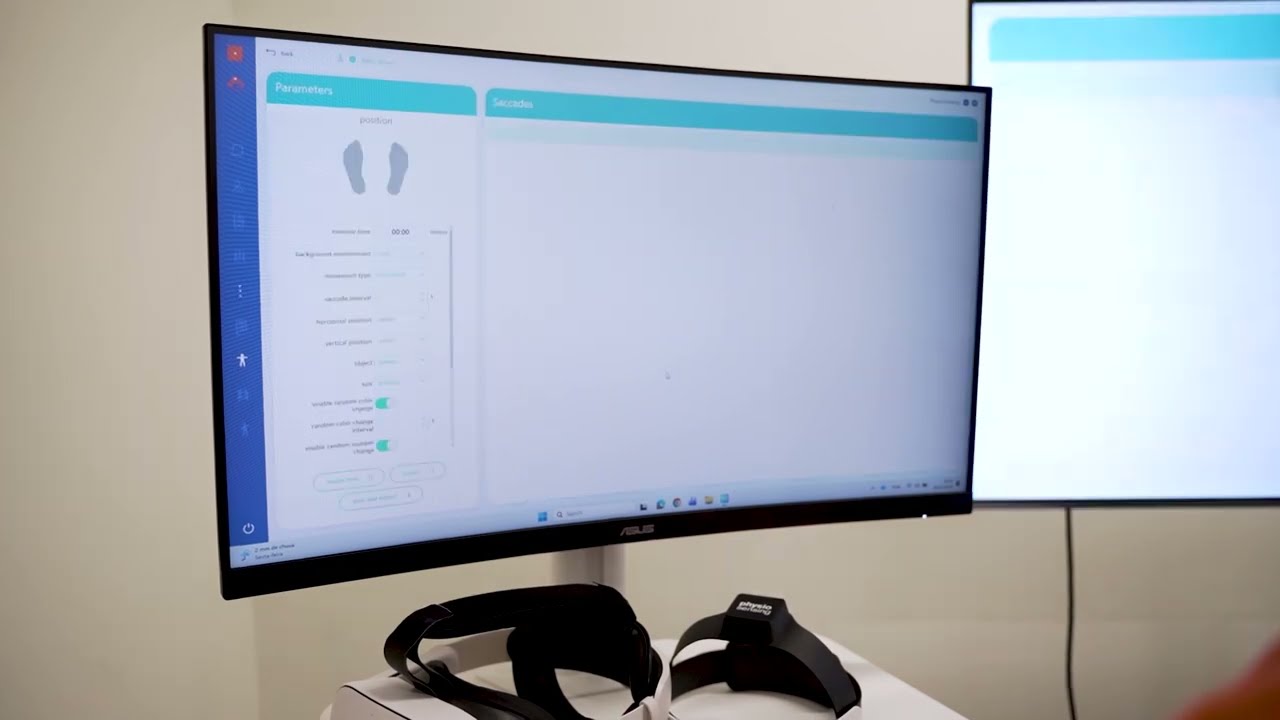
Not All Eye Exercises Are the Same: VOR Training vs. Oculomotor Training in Vestibular Dysfunction and Concussion
The visual and vestibular systems work in tight coordination to keep the world stable as we move through it. When this integrated system is disrupted, whether through peripheral vestibular hypofunction or after a traumatic brain injury (TBI), patients commonly experience dizziness, blurred vision, difficulty reading, visual fatigue, and challenges with balance. Although some rehabilitation programs for these conditions may appear similar on the surface, the underlying mechani
Ana Souto
Feb 3

Targeting Balance in Vestibular Rehabilitation - The Limits of Stability and Motor-Cognitive Training
Balance Assessment in Vestibular Rehabilitation - Limits of Stability Assessing the Limits of Stability (LOS) allows us to evaluate stability under dynamic conditions. This is especially important because many daily activities challenge these limits, such as leaning forward to reach an object. LOS provides valuable information about voluntary motor control required for safe and independent performance of activities of daily living. Remember that most falls occur during dynami
Ana Souto
Jan 30

Assessing Cervical Proprioception in Dizziness and Instability: The Joint Position Error Test
Neck afferent information is important for coordinated head, neck, and upper-extremity movements, as well as for maintaining body position and spatial orientation. When distorted, it can heavily contribute to altered cervical sensorimotor control, which can heavily affect balance and stability and lead to symptoms of dizziness and unsteadiness (Peng et al., 2021). Considering this, evaluation of cervical proprioception may be the missing key to better management of dizzy pati
Ana Souto
Jan 26


Balance Assessment Made Simple: Why the Basic Platform Is Perfect for Beginners
The Basic Balance System was designed specifically to address these concerns. It offers a practical, affordable, and user-friendly solution for professionals who want to begin offering balance assessments and training.
Ana Souto
Aug 18, 2025


Everything you need to know about Balance and Stability.
This beginner-friendly guide explains how force, pressure, and dynamic platforms turn invisible sway into clear numbers, why terms like posturography and foot-pressure maps matter, and how Sensing Future technology helps clinicians cut fall risk and speed rehabilitation.

Karan Somawat
May 22, 2025


Posturography best outcomes
The clinical examination of balance control, although relatively simple and cost‑effective, provides only a subjective assessment of potential deficits. To overcome the limitations in objectivity and reliability inherent to clinical testing, instrumented assessments using force and pressure platforms have been developed. These technologies allow for the precise quantification of postural control, a technique known as posturography. Read the article to discover Posturography b
Ana Souto
Feb 1, 2024


What is a Posturography?
You will learn what is a posturography, what is measured and importance.

Cláudia Tonelo
Nov 12, 2021


What is the difference between force platforms and pressure platforms?
1. The science behind Both platforms measure different biomechanical characteristics. However, it’s easy to get pressure confused with force, and vice-versa: The pressure platform measures the plantar pressure distribution, obtaining the plantar pressure map, similar to a heatmap of the foot. The force platform measures the magnitude and direction of the resulting force, independent of the contact area, obtaining the resulting vector from the ground reacti
Cláudia Tonelo
Mar 10, 2021
bottom of page