top of page

Blog
High value content on Stabilometry, Baropodometry and Virtual Reality.
All you need to know!
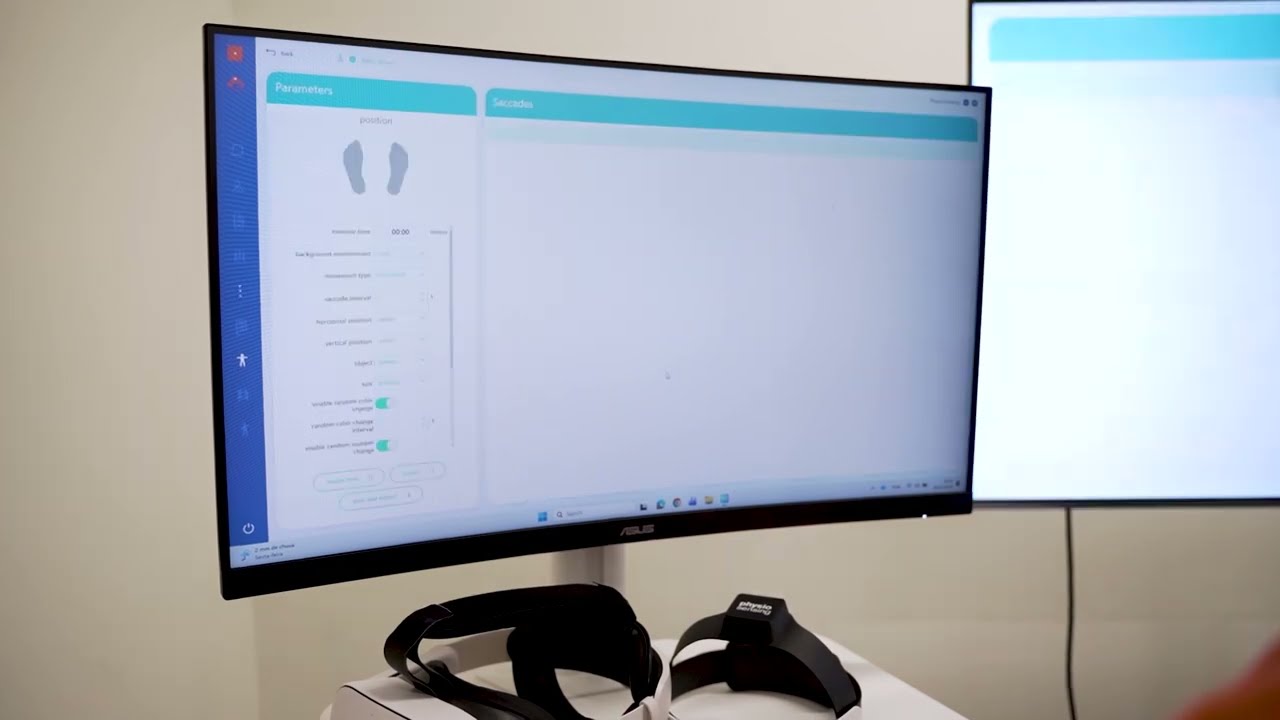
Not All Eye Exercises Are the Same: VOR Training vs. Oculomotor Training in Vestibular Dysfunction and Concussion
The visual and vestibular systems work in tight coordination to keep the world stable as we move through it. When this integrated system is disrupted, whether through peripheral vestibular hypofunction or after a traumatic brain injury (TBI), patients commonly experience dizziness, blurred vision, difficulty reading, visual fatigue, and challenges with balance. Although some rehabilitation programs for these conditions may appear similar on the surface, the underlying mechani

Ana Souto
Feb 3

Targeting Balance in Vestibular Rehabilitation - The Limits of Stability and Motor-Cognitive Training
Balance Assessment in Vestibular Rehabilitation - Limits of Stability Assessing the Limits of Stability (LOS) allows us to evaluate stability under dynamic conditions. This is especially important because many daily activities challenge these limits, such as leaning forward to reach an object. LOS provides valuable information about voluntary motor control required for safe and independent performance of activities of daily living. Remember that most falls occur during dynami
Ana Souto
Jan 30

Vestibular Rehabilitation: Achieving Habituation through Virtual Environments
Complaints of dizziness and a feeling of unsteadiness in visually complex environments, such as in grocery stores, during traffic, and among crowds, are frequent in patients suffering from vestibular disorders. One explanation for this is the higher reliance on visual information in these patients for postural orientation. The fear and anxiety associated with these daily life scenarios often lead to avoidance behaviour, which in turn increases the sensitivity to it. It is hig
Ana Souto
Jan 27


Virtual Reality for Vestibular Rehabilitation: A Modern Approach
Many individuals also develop visual dependence, relying too heavily on their vision to maintain balance. This can make visually complex environments - Learn how VR can help your patients
Ana Souto
Jul 9, 2025


A Case Study - Assessment and treatment of balance dysfunction using PhysioSensing pressure plate in a patient with chronic stroke sequelae
1. Introduction Stroke is the third leading cause of mortality and morbidity globally, with a predicted rise in prevalence creating an increased demand for rehabilitation services. Balance dysfunction, a common sequela post-stroke, significantly impairs daily activities and heightens fall risk. This case study investigates the impact of a 15-session balance exercise program, incorporating PhysioSensing balance plate with visual biofeedback and interactive games, on improving
Ana Souto
Sep 23, 2024


Perturbation-Based Balance Training
Read this post to know more about Perturbation-based balance training.
Ana Souto
Jul 15, 2024


Neurologic Disorders -Assessment and Treatment of Balance
Part III - Rehabilitation Program with PhysioSensing 1. Balance and Stability – Sagittal Goal: To improve postural control, while trying to distribute body weight equally on both feet to reach a stable (balance) position. Balance and Stability - Sagittal Exercise Interface Balance and Stability - Sagittal Exercise Parameters Definition of exercise’s parameters: Tolerance: 15% - Tolerance is the weight percentage margin allowed so that the indicator remains green. To decr
Ana Souto
Oct 2, 2023


Virtual Reality Therapy for Vestibular Rehabilitation
1. Balance Mechanisms & Vestibular Disorders Balance is the ability to maintain the body’s center of mass over its base of support. Balance is achieved and maintained by a complex set of sensorimotor control systems (Figure 1 – left) that include sensory input from vision (sight), proprioception (touch), and the vestibular system (motion, equilibrium, spatial orientation); integration of that sensory input; and motor output to the eye and body muscles [1]. When any of these s

Cláudia Tonelo
Sep 14, 2020
bottom of page