top of page

Blog
High value content on Stabilometry, Baropodometry and Virtual Reality.
All you need to know!
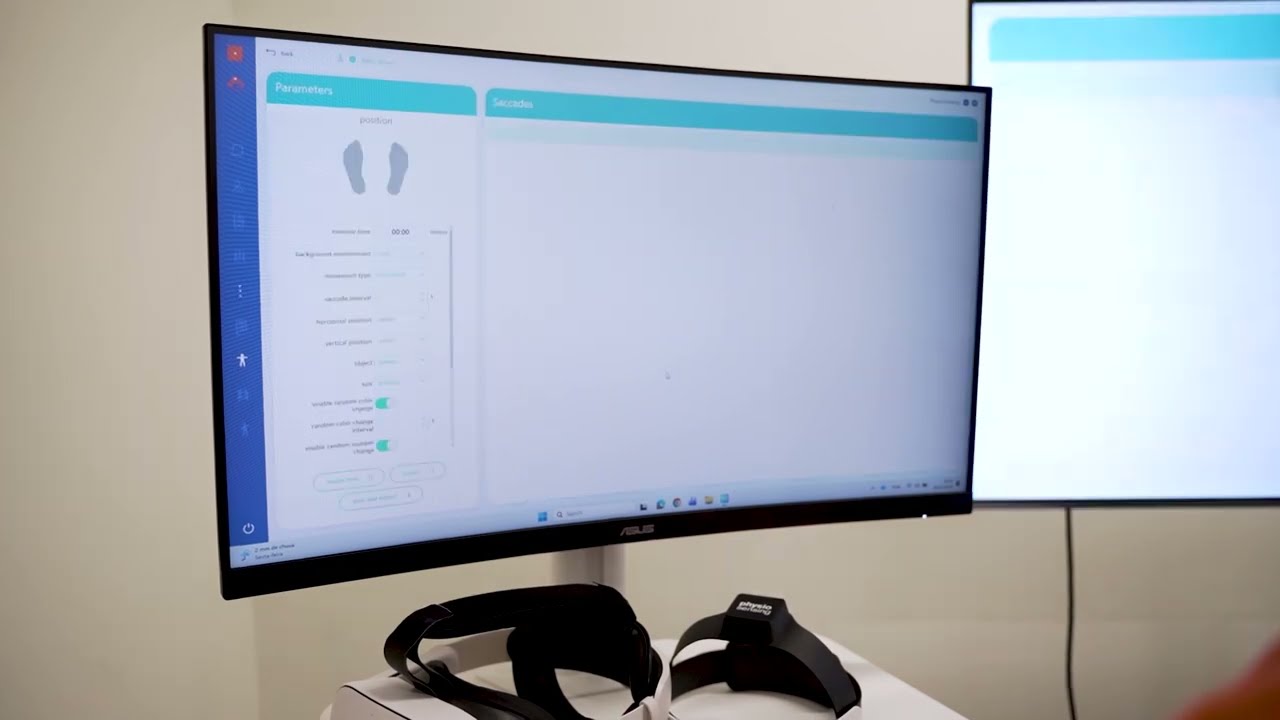
Not All Eye Exercises Are the Same: VOR Training vs. Oculomotor Training in Vestibular Dysfunction and Concussion
The visual and vestibular systems work in tight coordination to keep the world stable as we move through it. When this integrated system is disrupted, whether through peripheral vestibular hypofunction or after a traumatic brain injury (TBI), patients commonly experience dizziness, blurred vision, difficulty reading, visual fatigue, and challenges with balance. Although some rehabilitation programs for these conditions may appear similar on the surface, the underlying mechani

Ana Souto
Feb 3

Targeting Balance in Vestibular Rehabilitation - The Limits of Stability and Motor-Cognitive Training
Balance Assessment in Vestibular Rehabilitation - Limits of Stability Assessing the Limits of Stability (LOS) allows us to evaluate stability under dynamic conditions. This is especially important because many daily activities challenge these limits, such as leaning forward to reach an object. LOS provides valuable information about voluntary motor control required for safe and independent performance of activities of daily living. Remember that most falls occur during dynami
Ana Souto
Jan 30

Visual‑Vestibular Integration Assessment: Understanding Dizziness and Balance Disorders
Optokinetic stimulation (OKS) is an important tool in this context. OKS consists of exposure to large‑field moving visual stimuli, introducing controlled visual motion that creates a sensory conflict. This conflict forces the brain to reweight sensory information and reveals how effectively visual and vestibular signals are integrated.
Ana Souto
Jan 23


Understanding VOR Functional Testing: Dynamic Visual Acuity & the Gaze Stabilization Test
The vestibulo‑ocular reflex (VOR) helps keep vision stable when the head moves by generating eye movements in the opposite direction. This allows images to remain clear on the retina during everyday activities such as walking, bending, or turning the head.
When VOR performance is reduced, patients often experience blurred vision, oscillopsia, or difficulty keeping objects in focus while moving
Ana Souto
Jan 20


Balance Assessment Made Simple: Why the Basic Platform Is Perfect for Beginners
The Basic Balance System was designed specifically to address these concerns. It offers a practical, affordable, and user-friendly solution for professionals who want to begin offering balance assessments and training.
Ana Souto
Aug 18, 2025


Everything you need to know about Balance and Stability.
This beginner-friendly guide explains how force, pressure, and dynamic platforms turn invisible sway into clear numbers, why terms like posturography and foot-pressure maps matter, and how Sensing Future technology helps clinicians cut fall risk and speed rehabilitation.

Karan Somawat
May 22, 2025


The Science of Balance & Fall Prevention
Discover the challenges of an aging population and the importance of balance screening as a biomarker for elderly health.
Ana Souto
Mar 19, 2025


What’s new in PhysioSensing Software?
Hello! We have exciting news for all PhysioSensing users! Staying true to our DNA, we are constantly evolving and improving PhysioSensing software. Our updates are driven by two key pillars: scientific evidence and the invaluable feedback and ideas from our clients. Let’s not be modest here — PhysioSensing offers a strong clinical foundation for both balance assessment and training. With over 14 assessment protocols with detailed reports , more than 30 exercises , and 6 th

André Dias
Dec 12, 2024


A Case Study - Assessment and treatment of balance dysfunction using PhysioSensing pressure plate in a patient with chronic stroke sequelae
1. Introduction Stroke is the third leading cause of mortality and morbidity globally, with a predicted rise in prevalence creating an increased demand for rehabilitation services. Balance dysfunction, a common sequela post-stroke, significantly impairs daily activities and heightens fall risk. This case study investigates the impact of a 15-session balance exercise program, incorporating PhysioSensing balance plate with visual biofeedback and interactive games, on improving
Ana Souto
Sep 23, 2024


Perturbation-Based Balance Training
Read this post to know more about Perturbation-based balance training.
Ana Souto
Jul 15, 2024


5 Main Reasons for Limits of Stability reduction
Limits of stability Limits of Stability are a concept defined as the points at which the center of gravity approaches the limits of the base of support. In other words, it is defined as the maximum distance a person can displace the center of pressure (CoP) by leaning the body within the base of support without having to take a step, without losing balance (Tomita et al., 2021). The range of displacement in the anterior directions is around 6º to 8º, in a mediolateral displa
Ana Souto
Apr 5, 2024


Modified Clinical Test of Sensory Interaction in Balance - mCTSIB. How to perform and interpret the results!
How to perform mCTSIB and how to interpret the results.
Ana Souto
Feb 22, 2024


The True Nature of Balance Disorders
Balance disorders, often overlooked and misunderstood, can have a profound impact on an individual's daily life, making even simple tasks a formidable challenge. From feeling dizzy and lightheaded to experiencing unexplained falls, balance disorders encompass a range of symptoms that can be both frustrating and debilitating. In this article we will explore different causes for balance dysfunction and patient populations that do suffer from it, let us discuss the true nature o
Ana Souto
Dec 11, 2023


Neurologic Disorders -Assessment and Treatment of Balance
Part III - Rehabilitation Program with PhysioSensing 1. Balance and Stability – Sagittal Goal: To improve postural control, while trying to distribute body weight equally on both feet to reach a stable (balance) position. Balance and Stability - Sagittal Exercise Interface Balance and Stability - Sagittal Exercise Parameters Definition of exercise’s parameters: Tolerance: 15% - Tolerance is the weight percentage margin allowed so that the indicator remains green. To decr
Ana Souto
Oct 2, 2023


Neurologic Disorders - Assessment and Treatment of Balance
Part II - Balance Assessment with PhysioSensing PhysioSensing has 12 assessment protocols that measure balance through COP displacement. Below, you can see our evidence-based recommendation of which PhysioSensing assessment protocols are adequate for each balance dimension within the neurologic disorder’s context. Balance dimension PhysioSensing Assessment Sensory reception and organization mCTSIB, Romberg Test, Total Balance Pro Proprioception Limits of Stability, Romberg Te
Ana Souto
Sep 25, 2023


Neurologic Disorders - Assessment and Treatment of Balance
Part I - State of the art 1. Contextualizing Neurological disorders are one of the major causes of mortality and disability worldwide (GBD 2016 Neurology Collaborators, 2019) and are frequently associated with varying degrees of sensory and motor problems. Balance control impairment is often present in patients suffering from these disorders, highly impacting daily life. Having an intact balance control is required for maintaining postural stability and for enabling safe mo
Ana Souto
Sep 18, 2023


What is (really) the importance of Balance Assessment and Training?
In this article you will find out the importance of Balance Assessment & Training.

Cláudia Tonelo
Dec 2, 2022


One leg test balance! Very challenging!
Unilateral Stance, allows the assessment of the patient’s postural control with left and right foot raised, alternately.
Cláudia Tonelo
Jul 18, 2022


What’s new in Balance Software ´22 version?
After a long journey of new developments and software improvements, PhysioSensing Balance Software’22 is now available. After 10 years of development and experience, PhysioSensing Balance Software’22 is now a powerful balance software analysis tool . We are updating it to all our clients. In this version, you can find: All protocols, exercises and games interfaces are redesigned, accordingly to the main design of PhysioSensing. Two new games, are now available to trainee the
André Dias
May 26, 2022
Limits of Stability > The most used protocol for balance assessment
The Limits of Stability (LOS) is perhaps the most used protocol in the literature for balance assessment in a dynamic task.
Cláudia Tonelo
Apr 19, 2022
bottom of page